MONTESSORI MINUTES: MAXIMUM EFFORT
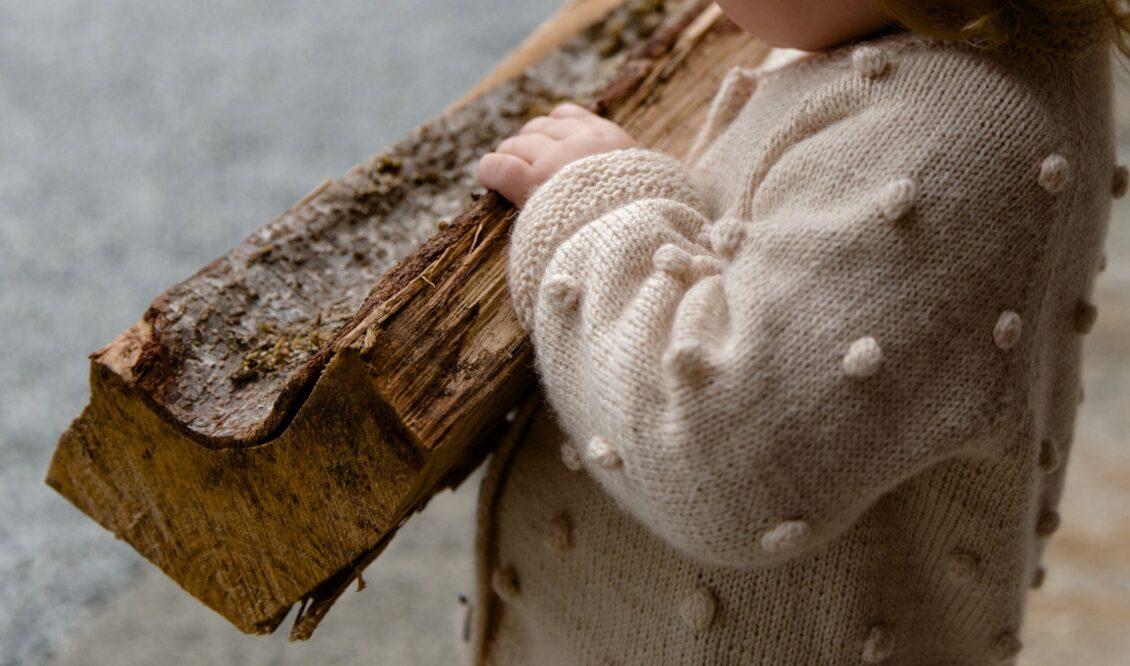
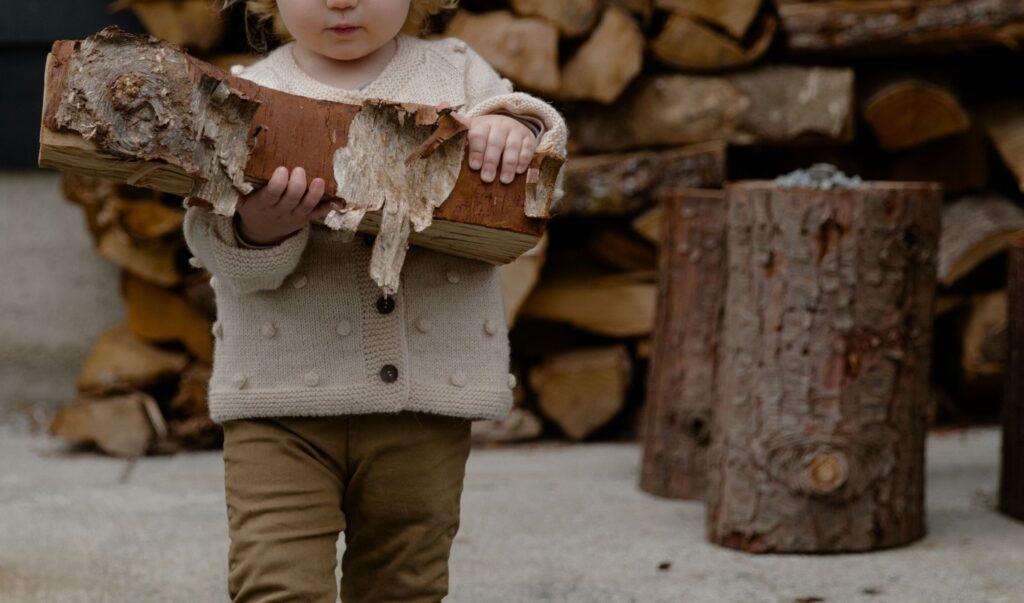
“Maximum effort,” a phrase coined by Montessori, may be something you haven’t heard of before. However, we’re confident that you have witnessed it in action! Maximum effort is at play when your toddler rearranges heavy furniture around the house or insists on carrying that disproportionately large shopping bag on your walk back from the supermarket. These physical challenges may appear nearly impossible, considering the small size of our children’s bodies. Yet, somehow, they persist in doing them and, to our surprise, even succeed!
As Montessori observed and wrote: A child hardly starts to walk, when
„he begins to carry heavy things and to do difficult things. We call it maximum effort. He climbs on chairs, he goes upstairs, he does all kinds of things which require a great effort.”
A DEVELOPMENTALLY IMPORTANT PHASE
We may find these endeavours cute or even comical. Sometimes, we might even feel annoyed by them or perceive them as dangerous. But what we often fail to realize is that it’s not just a normal phase; it’s also a developmentally crucial one!
During this stage, we tend to complain that our children won’t sit still or engage with their “educational” toys for long. But rest assured, there is nothing inherently wrong with them (or the toys on the shelf). At this age, their priorities when it comes to play are simply different! Being on the move and exercising maximum effort is our children’s way of constructing themselves: developing their strength, building their body muscles, refining their balance, honing their coordination (and effectively enhancing their proprioceptive sense, as professionals would put it nowadays).
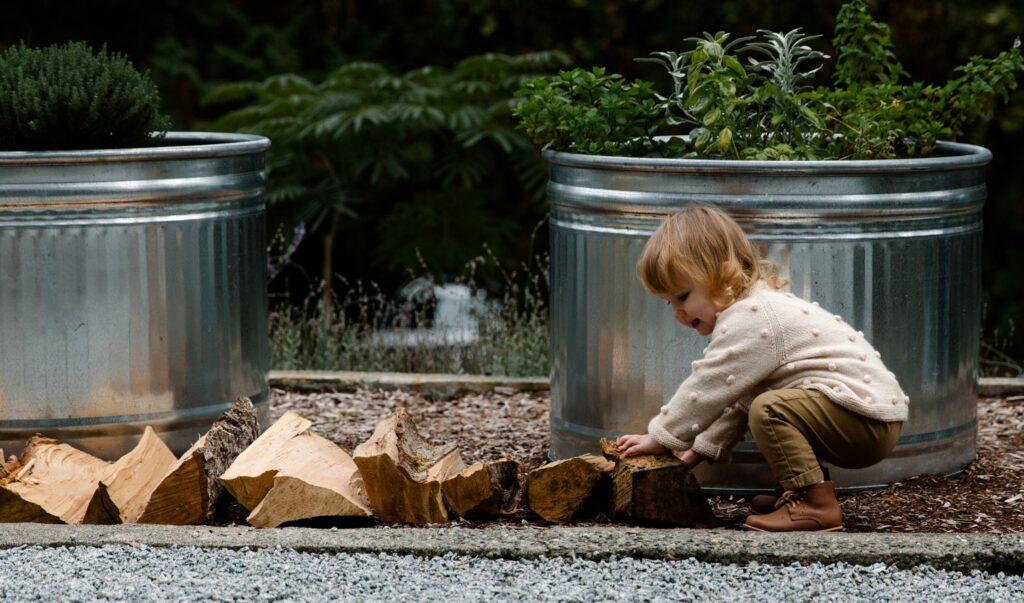
Given that it’s an important steppingstone in their development, our role is not to shut such activities down. Nor should we redirect our child to something entirely different. Just like we wouldn’t stop a baby from exerting all their strength to try to roll over or reach for a toy, right?
Instead, our focus should be on supporting this innate need. We should strive to offer our toddler a multitude of safe and appropriate opportunities and activities that allow them to channel and fulfil their desire for maximum effort.
ACTIVITY IDEAS TO EXERT MAXIMUM EFFORT
To help you find an outlet for this significant need, we have gathered a couple of ideas. Many of them may not resemble what we typically envision as play. However, we present them with the intention of reshaping our perspective: this is actually how play looks and should look like at this age.
So, what do children need? In simple terms, they need (heavy) objects to push, pull, or carry around. Here are a few examples:
- For instance, you can fill smaller side-handle bottles with water, seal them, and let your child carry them around the house.
- Provide boxes, baskets, and other containers for them to pack blocks or other heavy items in and out, allowing them to carry them around in the playroom.
- If you have a baby walker, load it with heavy books, building blocks, or beanbags, and let your child push it around. This wagon can also be an amazing playroom accessory to fill with heavy objects.
- Incorporate child-sized furniture that they are allowed to move around. How about a child-size table and chair that they can rearrange in the middle of the room themselves, especially during snack time?
- Large pilates balls are also fantastic for rolling around if you have enough space at home or in the garden. Due to their larger size compared to children, they will enjoy experimenting with them and their bodies!
- Take a long walk without a specific destination in mind, and if you have a trolley, let them push it along.
- Make carrying heavy cushions or pillows from one room to another and back a fun activity.
- Give them a backpack and fill it with a water bottle or other bulky items for them to carry around.
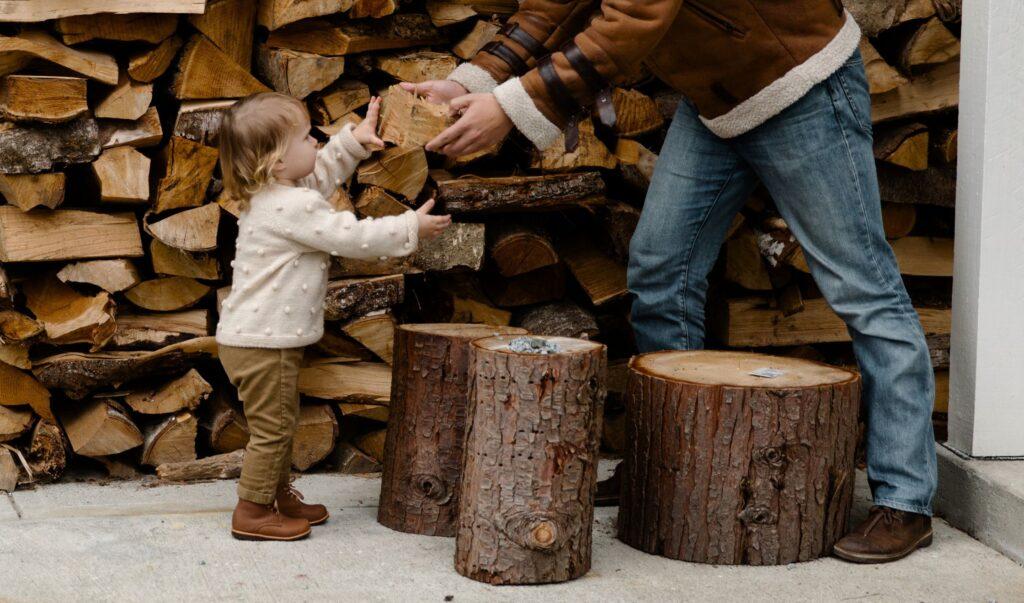
You can also explore other physical challenges together that allow them to push their boundaries:
- Pikler triangles continue to be beneficial at this age. However, if space is limited at home, do not invest in one now! Climbing stairs together can serve as a great alternative activity.
- Building an obstacle course for climbing or crawling can be engaging. A play tunnel can be particularly useful during this stage.
- Using heavy(ish) bean bags and throwing them into an outdoor hoop adds an element of physicality.
Involving children in housework, gardening, or practical life activities provides numerous options to engage in maximum effort:
- Go to the supermarket together and let them push a child-sized shopping cart filled with items. Allow them to carry some (non-breakable and non-bruisable) groceries or invite them to help unpack the bags at home.
- Loading and unloading the washing machine and pushing a basket full of clothes around can easily become a favorite activity.
- Setting the table is not only physically challenging but also purposeful. Let them bring a jug of water to pour their drinks or carry their plates.
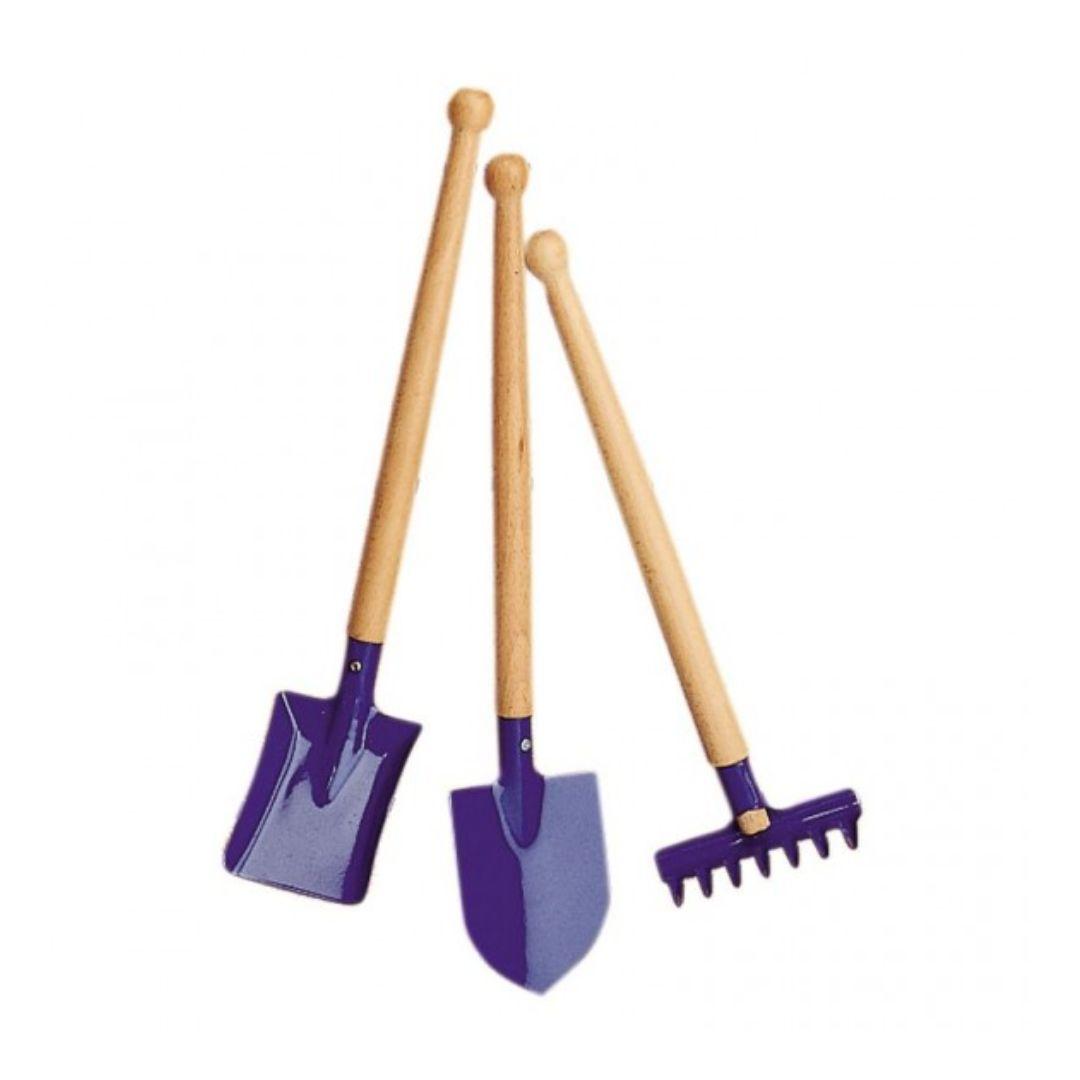
- The garden or backyard also offers abundant opportunities. Provide them with a child-sized wheelbarrow to load with stones or soil and let them push it around. Offer buckets and shovels for digging holes or using them in the sandpit.
- If there is easy access to water outside (supervised, of course), allow them to play with it using various containers. Carrying a large watering can around the house, filled to the brim, and watering the flowers can be enjoyable. Allowing them to work with a garden hose in sunny weather can also be a fantastic activity.
- Child-sized tools are great for involving toddlers in practical life activities. However, at times, working with large adult tools can offer its own benefits. It provides the physical challenge they seek and requires heightened concentration. Using a large broom, the vacuum cleaner, or a rake to collect leaves can be an interesting experience (again, supervised, needless to say).
- Assisting with baking can be a physically challenging exercise for a toddler. Stirring food or kneading dough can prove more difficult for them than we might expect, and it helps them push their physical boundaries.
DON’T BE THE OBSTACLE!
As you can see, these activities are actually easy and don’t require a lot of preparation. The biggest challenge in doing them is often ourselves. Most of the time, we become the obstacle!
Watching these activities can feel difficult. We may have the urge to reach out and help them, but we need to resist that impulse. We have to refrain from constantly repeating “Be careful!” (Of course, if there is actual danger, we should always intervene! And needless to say, hopefully, we should be always very vigilant and supervise children!)
Moreover, we need to accept that these activities may result in some mess. Sometimes, it may even require more time to accomplish household tasks than if we were to do them alone.
However, in those moments, we should always remember that while while we would do these activities to work on our environment, children are always working on themselves. At this stage, this is their way of “playing.”
Photography: Tatiana Syrikova on Pexel
• • •
RELATED PRODUCTS
-
 Plan Toys: Wooden Wagon€90,00

-
Janod: Happy Gardener Set€31,50

-
Plan Toys: Table and Chair€185,00