WHY PULL-ALONG TOYS ARE IRRESISTIBLE TO TODDLERS?
Pull-along toys are very easy to overlook. If I’m being honest, when my son was young, I did not give them too much attention, either. Not many of them made it onto our toy shelf back then – something I regret now!
When our children become unstoppable in a few weeks’ time after they’ve just made their first moves, the last thing we want them to do is… well, to move more! We are exhausted and a bit hesitant to give them toys that encourage them running around the house all the time (and us running after them!).
Sometimes we even start worrying that not a lot of useful-looking toys hold their attention longer than a minute, either! How will they develop their concentration, their fine motor skills, or their cognitive skills if they can’t sit still and be engaged with an activity for a moment? Been there, thought the exact same thoughts! And over the years, I have been talking to many exhausted mamas who came to ask for more toy recommendations for this very reason!
But here’s the thing, which I’ve realized since: at this stage, children do not need to sit still at all! Their constant movement is developmentally normal, and they will develop all the essential skills by simply satisfying their urge to move non-stop. Our children are our best guides in understanding what kind of toys and materials they need. We just need to follow along with them – like a little pull-along toy!
PUSH & PULL TOYS ARE CLASSIC FOR A REASON
Between 1 and 2 years old, while other toys may take a backseat, pull-along toys shine as the rockstars of the playroom! Though they may seem a little old-fashioned, there’s a good reason why they have endured through generations.
Push and pull toys offer numerous benefits for toddlers’ development. They not only satisfy your little mover’s gross motor needs but also promote whole-body coordination and orientation, fine motor strength, problem-solving skills, resilience, and independence – just to name a few superpowers!
PUSHING COMES BEFORE PULLING
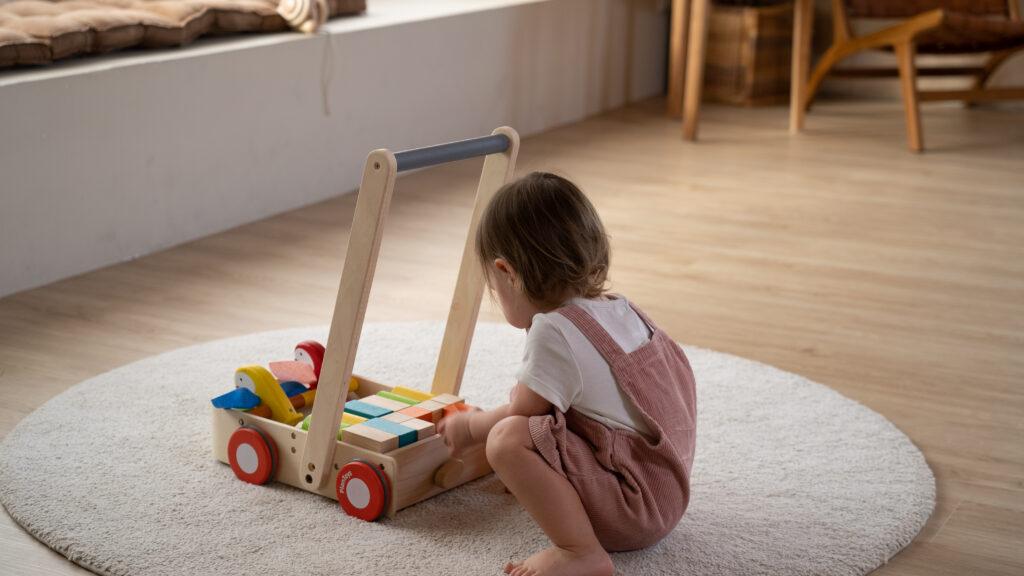
Pulling things is quite a complex movement that challenges children on all levels. But they will first learn to push before they can pull. So, before offering any pull-along buddies, provide lots of experience with pushing. A walker wagon can be great once your toddler is walking, but even big objects around the house can do the job, like a tall cardboard box or kitchen chairs if you don’t mind the neighbors. (Moving furniture around also tackles something called the “maximum effort” in Montessori circles – we wrote a bit more about that here!)
Somewhere between 15 and 18 months, your child will be ready to start pulling things behind them when walking. This is not only a sign of physical growth and confidence in their walk but also a significant milestone in cognitive development. Let’s unwrap the benefits of pulling toys to understand it better!
THE MAGIC OF PULL-ALONG TOYS
(Besides keeping our toddler busy, that is!)
1. These toys teach cause and effect.
While it might seem like a simple concept to us, it’s a big “eureka!” moment for your little one when they realize that they don’t need to move their body to reach a toy; they can simply pull on a string. This early lesson in cause and effect empowers them, showing that certain actions yield specific results. As your child pulls the toy behind them, they also discover that it follows the direction they’re taking.
2. They are great for fine motor skills.
Anything that builds gross motor skills in the upper body contributes to fine motor skills as well. To manipulate small objects with skill, fingers alone are not enough; it requires the involvement of the muscles and coordination in the shoulders, arms, and wrists.
Also, grasping a thin cord and simultaneously pushing something heavy with it is quite a tricky business! Toddlers might struggle, trying to find better ways to hold onto the toy, which ultimately strengthens their grip and refines hand and finger movements.
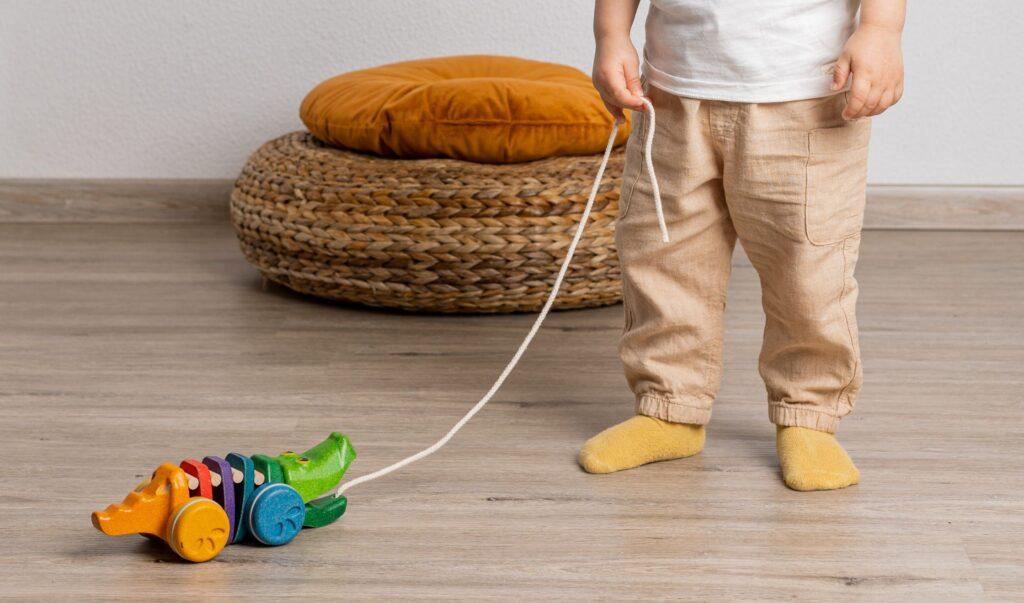
3. Pull-along toys are great for body coordination and spatial skills.
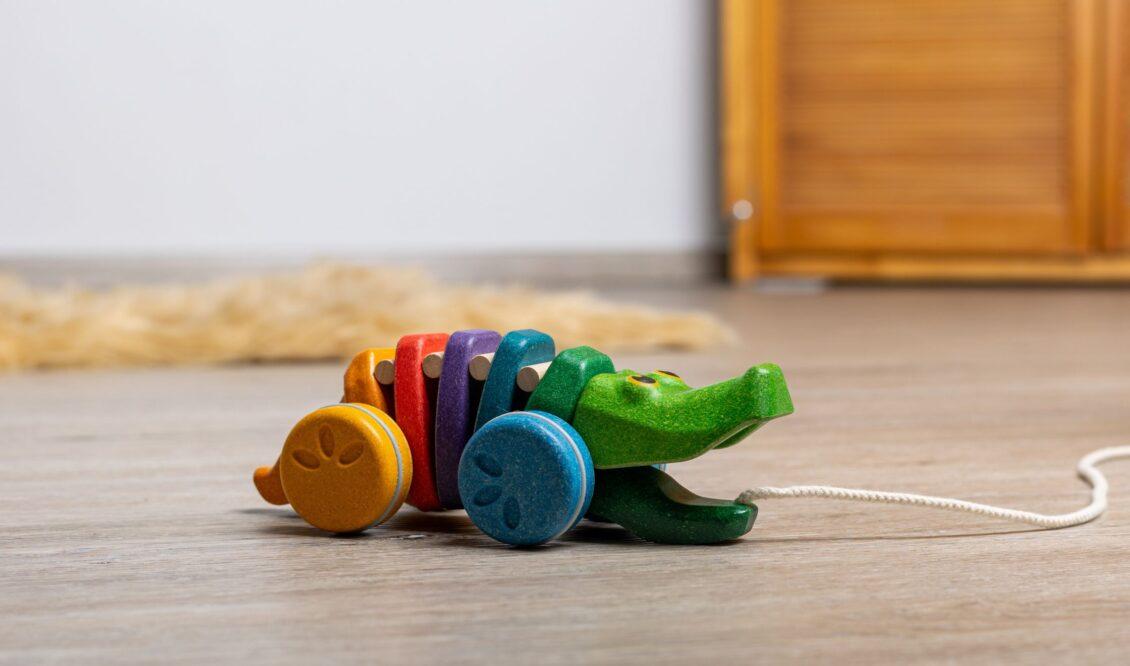
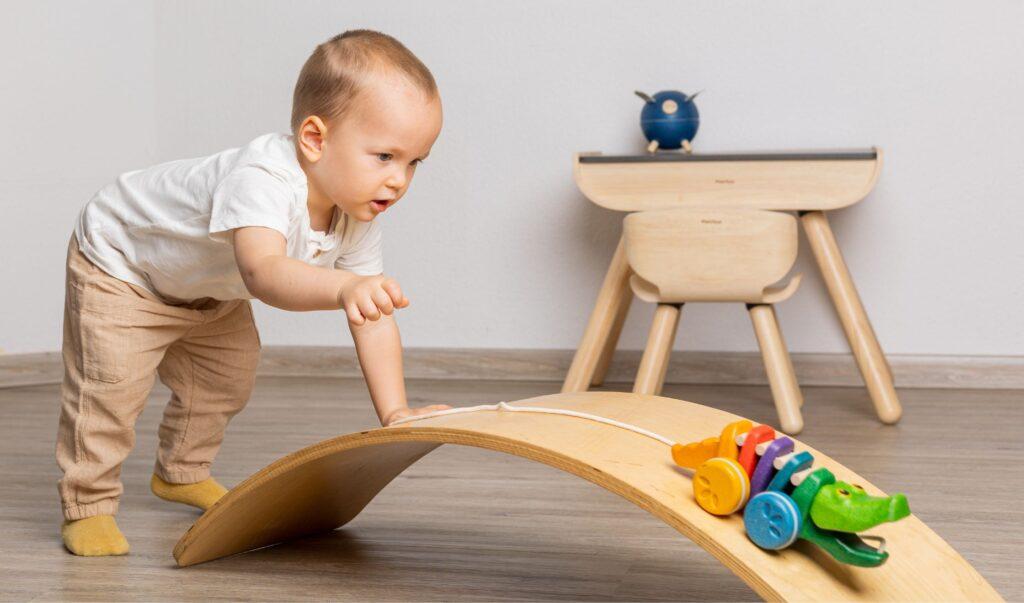
Although a small wooden puppy or crocodile pull-along toy may appear lightweight to adults, it requires considerable strength and body coordination for a child to pull it along. And then we haven’t even mentioned navigation yet!
Your child needs to hold their arm behind them and might want to peep back to check on the toy, but they also need to learn to look ahead to avoid bumps along the way! From entangled strings to toys falling off their wheels or getting stuck, these challenges become incredible learning moments – just as valuable as completing a puzzle!
4. They are great for toddlers exploring schemas.
If you haven’t heard of schema play yet, don’t let the expression scare you! Schemas are play patterns or repeated behaviours through which children understand the world around them. Two of these schemas are the rotating and transporting schemas, for which pull-along toys are great accessories. Toddlers are fascinated by wheels, how things roll or spin, and enjoy transporting objects from A to B. Pull-along toys, like this Grimm’s car or PlanToys wagon, can be excellent tools for them to load, unload, and carry things around the home.
5. PULL-TOYS CAN BE THE FIRST TOYS FOR IMAGINATIVE PLAY!
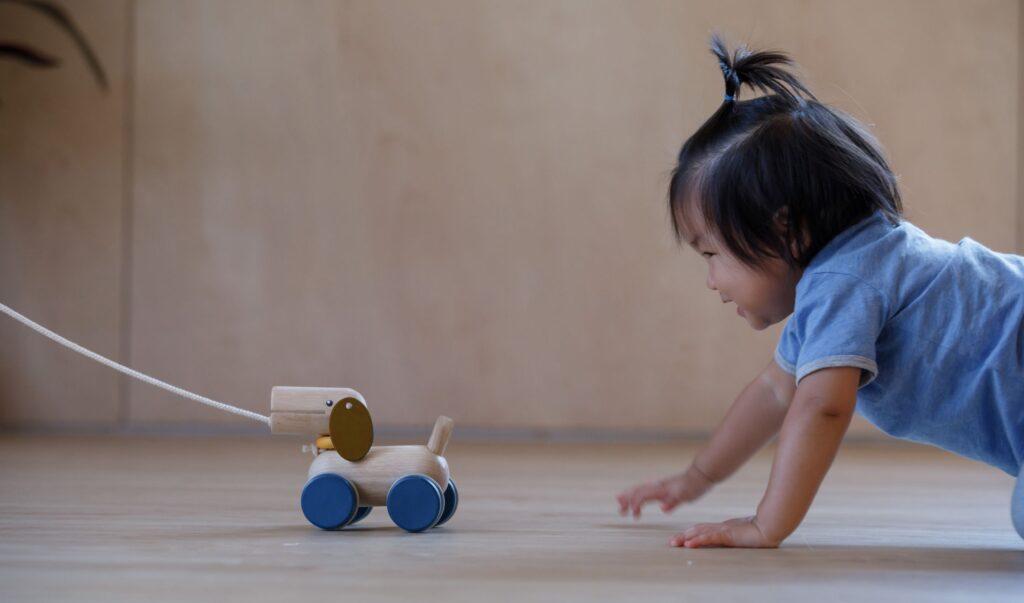
While the main strength of these toys lays in encouraging physical exploration and movement, many times they are the first steppingstone towards imaginative play, too. As children begin to imitate adults and develop symbolic thinking, they may discover that a pull-along puppy can serve not only as a companion for cruising but also for everyday life – engaging in role-play, taking care of the ‘dog,’ walking and feeding it, and socializing with their very first best friend.
Photography: Jasmina Lozar & PlanToys.